
- Introduction
- Top 5 Coin Cleaning Mistakes to Avoid
- Mistake 1: Using Abrasive Cleaners Can Damage Your Coins
- Mistake 2: Not Researching Before Cleaning Can Ruin Your Collection
- Mistake 3: Polishing to Make Coins “Shiny” Destroys Their Value
- Mistake 4: Ignoring Professional Grading Standards Before Cleaning
- Mistake 5: Using Household Items Without Testing Can Harm Your Coins
- Conclusion
Introduction
Cleaning coins might seem like a simple way to make your collection shine, but as a beginner coin collector, I learned the hard way that it’s a minefield of potential mistakes. Early in my collecting journey, I tried polishing a 1964 Kennedy Half Dollar with a household cleaner, thinking it would look “better”—instead, I stripped its natural patina and reduced its value from $15 to nearly nothing. That experience taught me a valuable lesson: you need to clean coins safely to avoid damaging their value. In 2025, with the growing popularity of coin collecting and the availability of digital tools to learn proper techniques, there’s no excuse for ruining your treasures. This guide will walk you through the top 5 coin cleaning mistakes to avoid, helping you clean coins safely and preserve the value and beauty of your collection. Whether you’re handling a rare 1804 Draped Bust Dollar or a common 1965 Canadian Silver Dollar, these tips will keep your coins safe and valuable for years to come.
Top 5 Coin Cleaning Mistakes to Avoid
Mistake 1: Using Abrasive Cleaners Can Damage Your Coins
One of the biggest mistakes beginners make when trying to clean coins safely is using abrasive cleaners like baking soda, toothpaste, or metal polish. These materials might seem harmless, but they can scratch the coin’s surface, removing the natural patina—a layer of oxidation that forms over time and is prized by collectors. For example, a 1943 Steel Penny, minted during World War II when copper was scarce, is worth 10-50 cents in circulated condition. But if you scrub it with baking soda to remove its tarnish, the scratches can reduce its value to nearly zero, as the coin loses its original finish. I’ve seen collectors at coin shops pass on scratched coins, even if they’re rare, because the damage is irreversible.
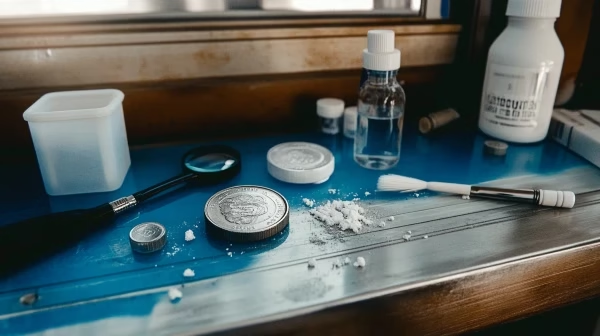
How to Avoid It and Clean Coins Safely: Never use abrasive substances on your coins. If a coin needs cleaning (e.g., to remove dirt), use distilled water and a soft brush, as we detailed in our guide “How to Clean Coins Safely in 2025: Guide for Collectors.”
Mistake 2: Not Researching Before Cleaning Can Ruin Your Collection
Cleaning a coin without researching its specific needs can lead to disaster, especially if you want to clean coins safely and preserve their value. Different metals—silver, copper, steel, gold—react differently to cleaning methods, and some coins are more valuable in their natural state. Take the 1804 Draped Bust Dollar, often called the “King of American Coins.” With only 15 known examples, it’s worth millions—one sold for $7.68 million in 2021. If you tried to clean such a coin with an acidic solution like vinegar, you could strip its natural patina, leaving an unnatural sheen that reduces its appeal and value significantly. Even common coins can be affected—cleaning a 1965 Canadian Silver Dollar (worth $15-$20 due to its 80% silver content) with an improper method might dull its luster, making it less appealing to collectors.
How to Avoid It: Research the coin’s material and historical context before cleaning to ensure you clean coins safely. For silver coins like the 1965 Canadian Silver Dollar, a gentle rinse with distilled water is safest—avoid acids or harsh chemicals that can affect the surface. For copper coins, even water can cause spotting if not dried properly. Use resources like the Red Book or Numista to understand your coin’s composition, and check guides like ours on “How to Clean Coins Safely in 2025” for tailored advice on how to clean coins without damaging them in 2025. The image for this section likely shows a 1965 Canadian Silver Dollar—note its original luster, which you’d want to preserve.
Mistake 3: Polishing to Make Coins “Shiny” Destroys Their Value
Polishing coins to make them “shiny” is a common temptation, but it’s a mistake that can destroy their value, even if you’re trying to clean coins safely. Collectors prize the natural patina on coins, as it shows age and authenticity. For instance, a 1955 Double Die Lincoln Cent, where the date and “LIBERTY” appear doubled, is worth $500-$1,000 in Good (G-4) condition. But if you polish it to remove its tarnish, you’ll strip the patina, leaving an unnatural sheen that collectors avoid—its value could drop to $100 or less. I made this mistake with a 1964 Kennedy Half Dollar early on, thinking a shiny coin would look better. Instead, I learned that the dull, natural finish was part of its $15 value.
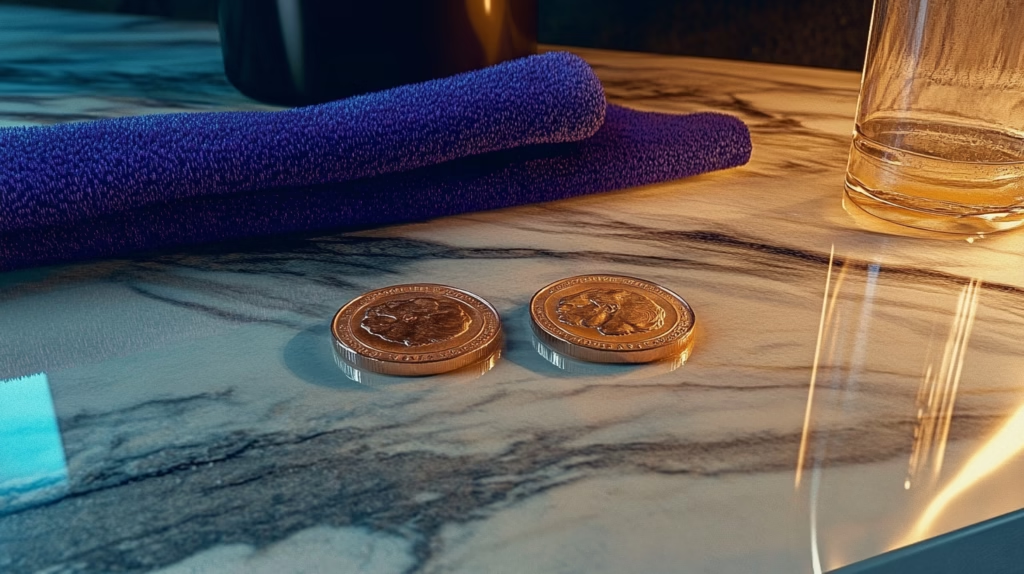
How to Avoid It: Resist the urge to polish your coins, as this goes against the principles of how to clean coins safely. If they’re dirty, a gentle soak in distilled water (not tap water, which has minerals that can cause spotting) and a soft brush can remove surface dirt without harming the patina. Dry the coin thoroughly with a soft cloth to prevent water spots, especially on silver or copper coins.
Mistake 4: Ignoring Professional Grading Standards Before Cleaning
Cleaning a coin without understanding its grade can lead to over-cleaning, which damages its condition and value—an important consideration if you want to clean coins safely. Coins are graded on the Sheldon Scale from Poor (P-1) to Perfect Mint State (MS-70), and cleaning can lower a coin’s grade by removing patina or causing scratches. For example, a 1964 Kennedy Half Dollar in Very Fine (VF-20) condition—showing clear details but light wear—is worth $15 due to its 90% silver content. But if you clean it aggressively, it might drop to Poor (P-1), reducing its value to its melt weight of ~$10. Professional grading services like PCGS and NGC emphasize leaving coins in their natural state unless professionally cleaned, as improper cleaning can disqualify a coin from high grades like MS-65, where a 1964 Kennedy Half Dollar could be worth $50.
How to Avoid It: Learn basic grading before cleaning to ensure you clean coins safely—use apps like PCGS CoinFacts to compare your coin’s condition to standard images. Look at high points (e.g., hair on Kennedy’s portrait, wheat stalks on a Lincoln Penny) to assess wear. If a coin is in VF-20 or better, avoid cleaning unless it’s necessary (e.g., removing dirt without affecting patina). I once avoided cleaning a 1965 Canadian Silver Dollar after seeing it was AU-50 (almost uncirculated)—it’s now worth $25 instead of $15 because I preserved its grade.
Mistake 5: Using Household Items Without Testing Can Harm Your Coins
Many beginners use household items like vinegar, lemon juice, or soap without testing their effects, assuming they’re safe, which can prevent you from learning how to clean coins without damaging them in 2025. These items can be too harsh, especially for certain metals. For instance, vinegar can clean silver coins but may cause spotting on copper coins like a 1943 Bronze Penny—a rare error worth millions (one sold for $1.7 million in 2010). If you used vinegar on a common 1943 Steel Penny (worth 10-50 cents), the acid could corrode the zinc coating, leaving an unsightly finish and reducing its value to nothing. I learned this lesson after using lemon juice on a 1909 Wheat Penny—it caused tiny spots that made it unappealing to collectors, dropping its value from $1 to a few cents.
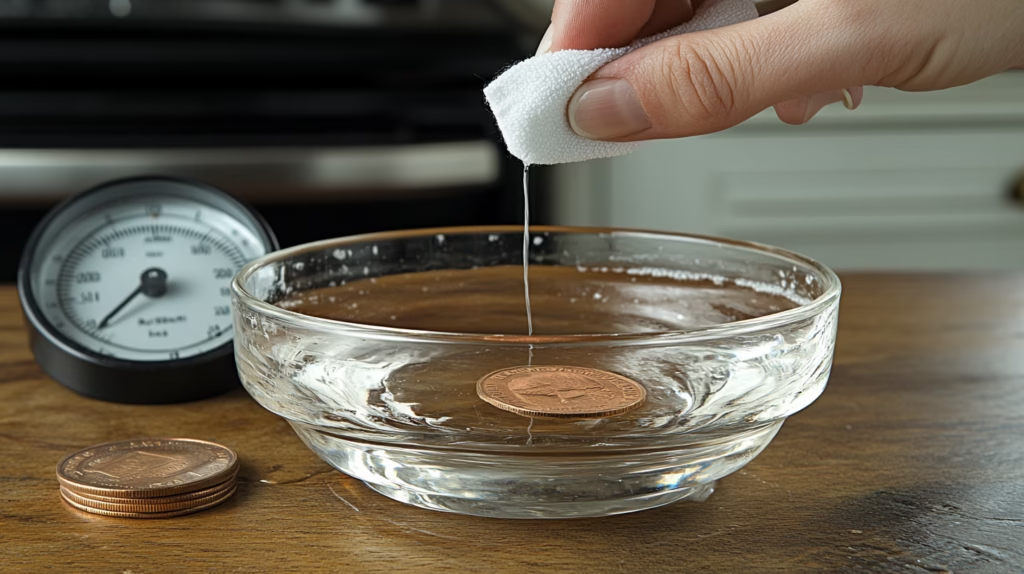
How to Avoid It: Test any cleaning method on a low-value coin first, like a circulated Lincoln Penny from the 1970s (worth 1 cent), to ensure you clean coins safely. If you must use a household item, stick to mild soap (e.g., dish soap diluted in distilled water) and rinse thoroughly with distilled water to avoid residue. For silver coins like the 1965 Canadian Silver Dollar, a brief soak in diluted soap can work, but dry immediately with a soft cloth. Always research the coin’s metal—copper, silver, and steel require different care.
Conclusion
Avoiding these 5 coin cleaning mistakes will help you preserve the value and beauty of your collection as a beginner in 2025, ensuring you clean coins safely. Whether you’re handling a rare 1804 Draped Bust Dollar, a 1965 Canadian Silver Dollar, or a 1955 Double Die Lincoln Cent, proper care ensures your coins remain treasures for years to come. At Treasure in Coins, we’re here to guide you through every step of your collecting journey—I’ve made these mistakes so you don’t have to! Have you encountered any cleaning mishaps? Share your story with us, and explore more numismatic tips on Treasure in Coins—like our Beginner’s Guide to Coin Collecting: 5 Steps for 2025 or How to Identify Valuable Coins as a Beginner. Don’t forget to sign up for our weekly newsletter (in the sidebar) to get updates, tips, and inspiration delivered to your inbox. Keep your coins safe and your collection growing—happy collecting!